
- Service ▼
- Products ▼
✨ 20+ Years Experience | 5,000+ Global Brands All Products →
- Sustainability
- About Us ▼
- Related Resources ▼
- Contact Us

Quick answer: To measure a box, keep the opening facing you and measure the inside. Length is the longest side of the opening, width is the shorter side, and depth (height) is the vertical distance from the opening to the base. Always write dimensions as Length × Width × Depth.
Every box is described by three numbers, and manufacturers around the world expect them in the same order: Length × Width × Depth. Mixing up that order is the fastest way to receive a box that does not fit.
Length is the longest edge of the face that opens. On a mailer box that is the flap side; on a lid-and-base box it is the longest edge of the base tray. Measuring from the opening keeps the definition consistent even when a box is wider than it is long.
Width runs perpendicular to the length, measured across the same open face. If your box happens to be wider than it is long, the width simply becomes the larger of the two numbers. That is normal — length is still listed first, because the opening defines it.
Depth, often written as height, is the distance from the opening down to the inside base. Some suppliers label it H, others D. Both mean the third number in the sequence, and it always runs perpendicular to the opening.
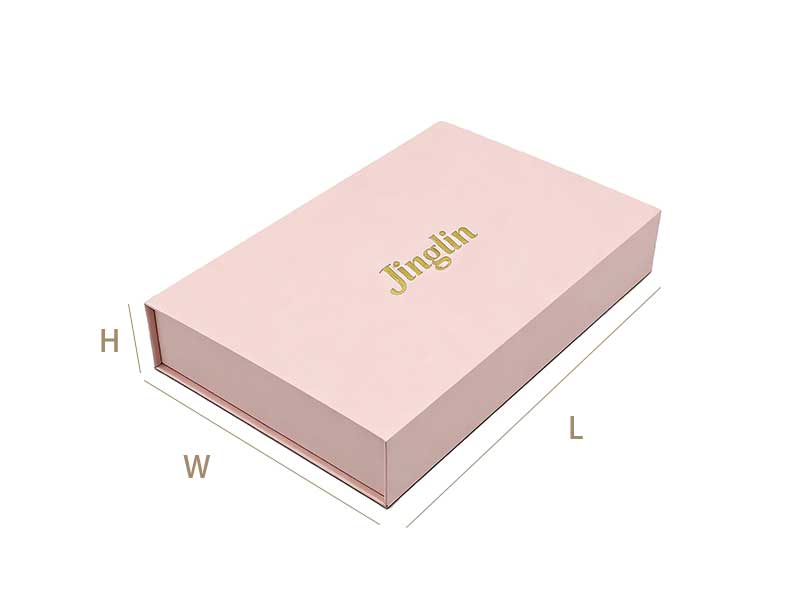
Standard box dimensions: length, width and depth measured across the opening.
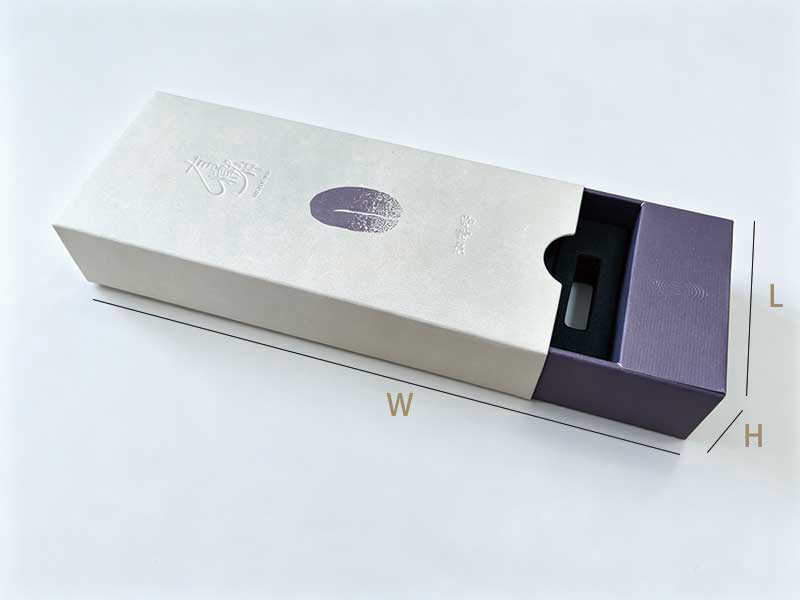
When a box is wider than it is long, width becomes the larger number — length is still listed first.
This is the exact sequence our engineers use before quoting any custom packaging project.
Measure to the nearest millimetre (or 1/16 inch) and repeat every measurement twice. A 2 mm error is invisible on a ruler but decisive when a box is produced in thousands.
Internal (inside) dimensions describe the usable space your product actually sits in. External (outside) dimensions describe the box as it leaves the factory. They are never the same number, because the board has thickness.
Always order by internal dimensions unless you have a specific reason not to. A carton built to 200 × 150 × 80 mm externally on B-flute board may only offer about 194 × 144 × 74 mm internally — enough for a phone case to rattle, or for a wrapped product to be crushed by foam that no longer fits.
If you only know your product size, give the supplier that number plus the clearance you want and let them calculate the outer size. If you only know the outer size, say so explicitly — otherwise the factory will assume you mean the production (outer) dimension.
The measuring rule never changes, but the reference surface and the board thickness do. This table lists the measurement basis our factory uses for each box type, together with the wall thickness we reserve. If you are still deciding which box type to order, our guide to custom packaging for small business explains box styles, low MOQs and how to avoid tooling fees.
| Box type | Measurement basis | Wall / board thickness | Tolerance to reserve |
|---|---|---|---|
| Corrugated mailer box (E-flute) | Internal length × width × depth, measured across the open face | E-flute ≈ 2 mm per wall | Add 4 mm to length and width if only the external size is known |
| Corrugated mailer box (B-flute) | Internal, measured at the opening | B-flute ≈ 3 mm per wall | Add 6 mm to length and width |
| Lid and base (two-piece) | Inside of the base tray; the lid is cut 2–3 mm larger | 1200 gsm grey board ≈ 2 mm | Lid +2 to 3 mm on length and width |
| Magnetic folding box | Internal, measured in the closed position | 1200 gsm ≈ 2 mm; 1400 gsm ≈ 3 mm | Deduct 4–6 mm from the external size to find usable space |
| Custom shipping box (outer carton) | Internal, plus clearance around the packed goods | B-flute ≈ 3 mm; C-flute ≈ 4 mm | Add 3–5 mm per side for inserts and cushioning |
Measurement basis and typical board tolerances by box type — confirm the flute grade before locking a size.
Board thickness is the difference between the size you order and the size you get. These are the figures we work with every day:
If you need an internal 250 × 200 × 70 mm in a rigid magnetic box built from 1200 gsm grey board, the external size works out at roughly 254 × 204 × 74 mm. Telling your supplier “internal 250 × 200 × 70” removes all guesswork. The same maths applies to our magnetic folding boxes.
Flat mailer boxes are quoted by their unfolded sheet, not by their assembled size. Use these two formulas, and remember that the depth appears four times on the length and three times on the width:
Unfolded length = Length + (4 × Depth)
Unfolded width = (2 × Width) + (3 × Depth)
Multiply the unfolded length, the unfolded width and the paper thickness to estimate the material volume of a flat box.
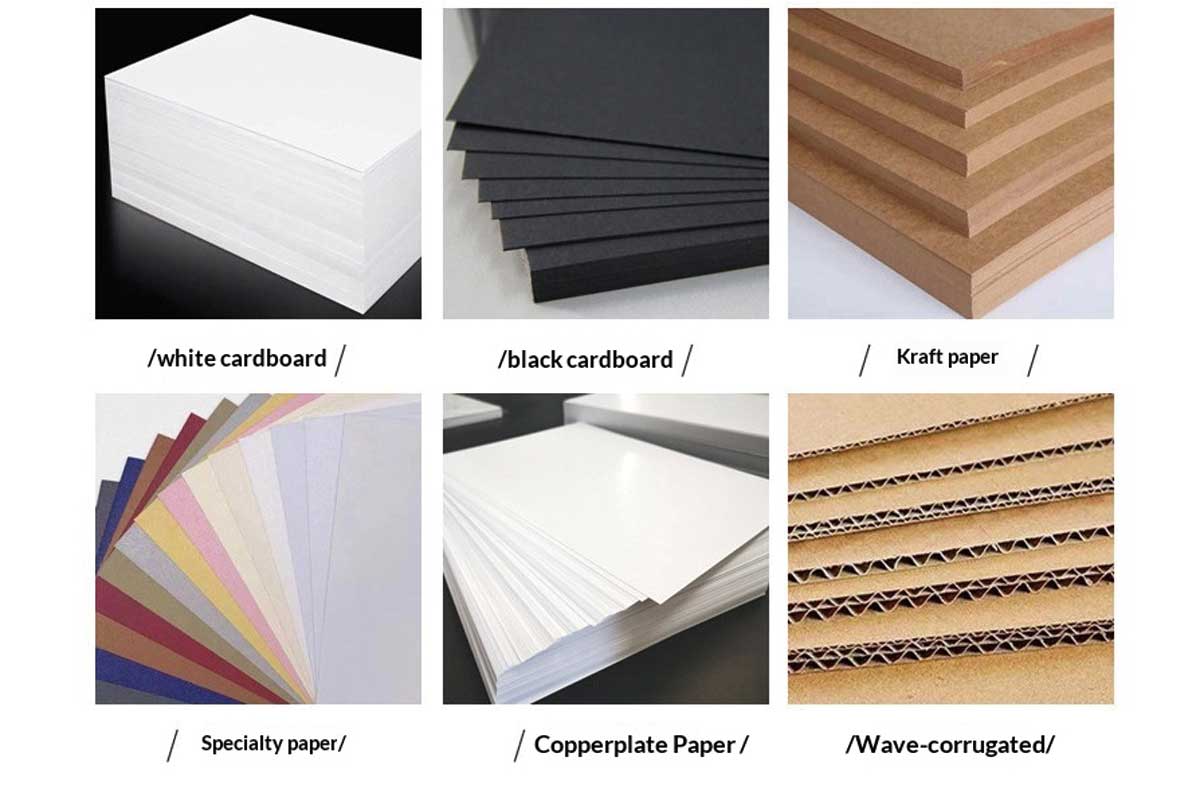
Board thickness is the gap between the size you order and the size your product gets.
Carriers bill on the greater of actual weight and dimensional weight, so an oversized box can cost you twice. Once you know how to measure a box, use those numbers to price the shipment.
Volume (m³) = Length (m) × Width (m) × Depth (m)
Worked example: 29 cm × 21 cm × 7 cm = 0.0043 m³ per box. At the standard volumetric factor of 167 kg per cubic metre, one box carries about 0.72 kg of volumetric weight — the trigger for a dimensional surcharge once your product is light.
This formula suits pre-assembled boxes, including drawer boxes, lid-and-base packs and magnetic flip-top designs. Multiply the single-box volume by your order quantity to get the total cargo volume, then multiply by 167 to reach the total volumetric shipping weight.
Trimming 1 cm off each side can drop a carton into a cheaper size bracket. Our custom shipping boxes are engineered to sit under those limits while keeping crush resistance.
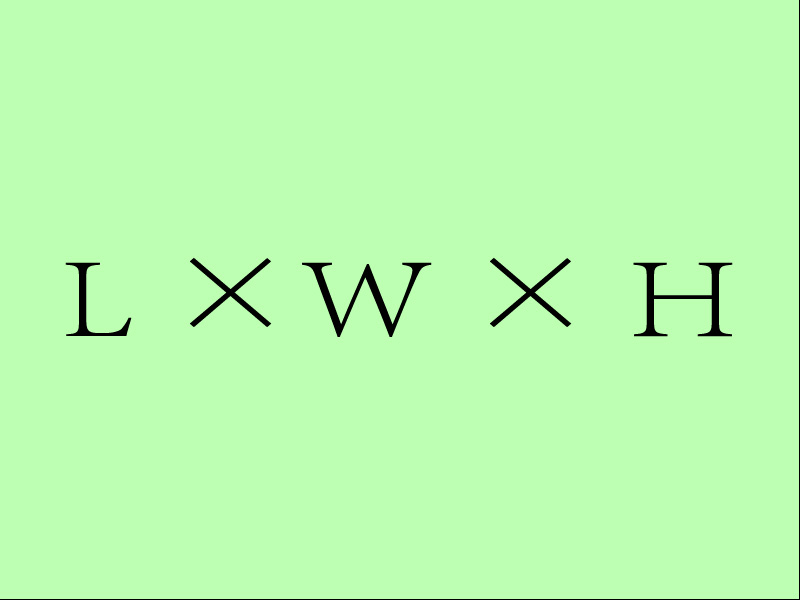
Calculate cubic volume from your measurements before you request a shipping quote.
One more habit worth keeping: measure at least two boxes from the same batch. Manufacturing tolerances of ±1–2 mm are normal in corrugated converting, and knowing the real spread protects you before you order 5,000 units.
Learning how to measure a box correctly is the cheapest quality control you will ever apply. Measure the internal space, list Length × Width × Depth, allow for board thickness, and leave clearance for inserts and cushioning.
If you would rather not take the risk, send us your product size and we will recommend the box type, the flute grade and the exact internal dimensions. Since 2006 Jinglin Packaging has produced corrugated mailer boxes, rigid magnetic folding boxes and heavy-duty custom shipping boxes for brands shipping to more than 40 countries.
Send us your product measurements and we will return a size recommendation, a free die-line drawing and a physical sample — usually within one working day.
Get My Free Size Sample →Outer dimensions include the board thickness on every wall, so the usable space is always smaller than the outside suggests. If you order by outer size, the inside of the box can be 4 to 8 mm tighter than expected and the product will not fit. Always state whether your numbers are inner or outer dimensions.
Millimetres are the international default for custom packaging and remove rounding errors — 250 × 200 × 70 mm is unambiguous. Inches are common in the US market; if you use them, work to 1/16 inch. Never mix the two units in one specification, and always state the unit on the drawing.
Plan 3 to 5 mm of clearance per side for a die-cut cardboard insert and 5 to 10 mm per side for foam or molded pulp. For a 250 × 200 × 70 mm product with a foam tray, an internal box size of roughly 260 × 210 × 80 mm leaves comfortable room without letting the product shift.
Measure the longest, widest and tallest points of the product as if it were inside a block, then add clearance. For irregular shapes, wrap the product in its protective material first and measure that silhouette — it is closer to the real packed size and prevents both crushing and rattling.
Length is the longest side of the opening, width is the shorter side of the same opening, and depth (also called height) is the vertical distance from the opening to the base. Written in that order — Length × Width × Depth — the three numbers describe any rectangular box without ambiguity.
A mailer box is quoted by its unfolded sheet: unfolded length equals length plus four times the depth, and unfolded width equals twice the width plus three times the depth. Measure the assembled box first, then convert, and confirm the board grade with your supplier before finalising the die-line.
Both terms describe the same measurement. Depth is the term most packaging engineers use for a box sitting on its base, while height is used more often for displays and cartons. Either way it is the third number and it always runs perpendicular to the opening.