- Service ▼
- Products ▼
✨ 20+ Years Experience | 5,000+ Global Brands All Products →
- Sustainability
- About Us ▼
- Related Resources ▼
- Contact Us
Pizza is a hot, oily product. As it sits in the box, steam and grease are released. Without any protective barrier, the oil would soak into the cardboard fibers, making the box soggy, weak, and visually unappealing. A grease-soaked box can leak onto customers’ hands, car seats, or delivery bags — creating a negative experience.
Greaseproofing isn’t just about cleanliness; it’s also about brand perception. A clean, sturdy box communicates quality and care, while a stained, flimsy box undermines your restaurant’s professionalism. Greaseproofing also protects food safety, because hot oil that migrates through the board can carry food residue back toward the product. That’s why grease resistance is the first specification most buyers evaluate when sourcing greaseproof pizza boxes.
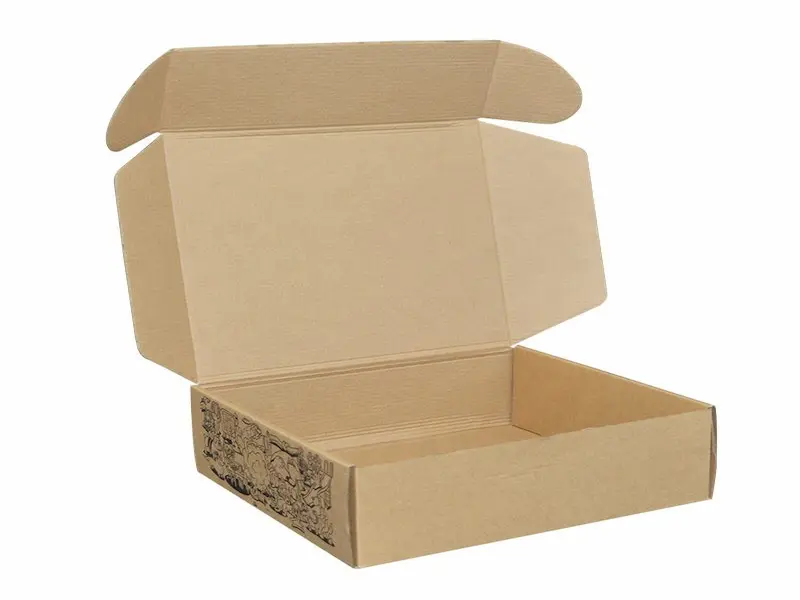
Pizza boxes with oil-resistant coating
There are several ways to achieve grease resistance in pizza box packaging. The most common methods include:
Each of these barriers can be matched to your menu, delivery time and sustainability targets — see how we apply them across our custom food packaging range.

Jinglin’s custom pizza box
Beyond coatings, the physical structure of a pizza box also plays a role. Corrugated pizza boxes use a fluted medium between two flat liners. This fluted layer can trap some oil and moisture, preventing immediate saturation. However, over time, grease can still migrate through the flutes if no barrier coating is present.
Another structural consideration is the ventilation holes or folded corners. Proper venting allows steam to escape, reducing condensation inside the box. Less moisture means less chance of the box becoming soggy. Some designs also feature a tuck-top or locking mechanism that keeps the box tightly closed, minimizing heat and oil exposure to the outer surface. Taken together, the coating and the structure decide how well a grease-resistant box holds up on a long delivery route.
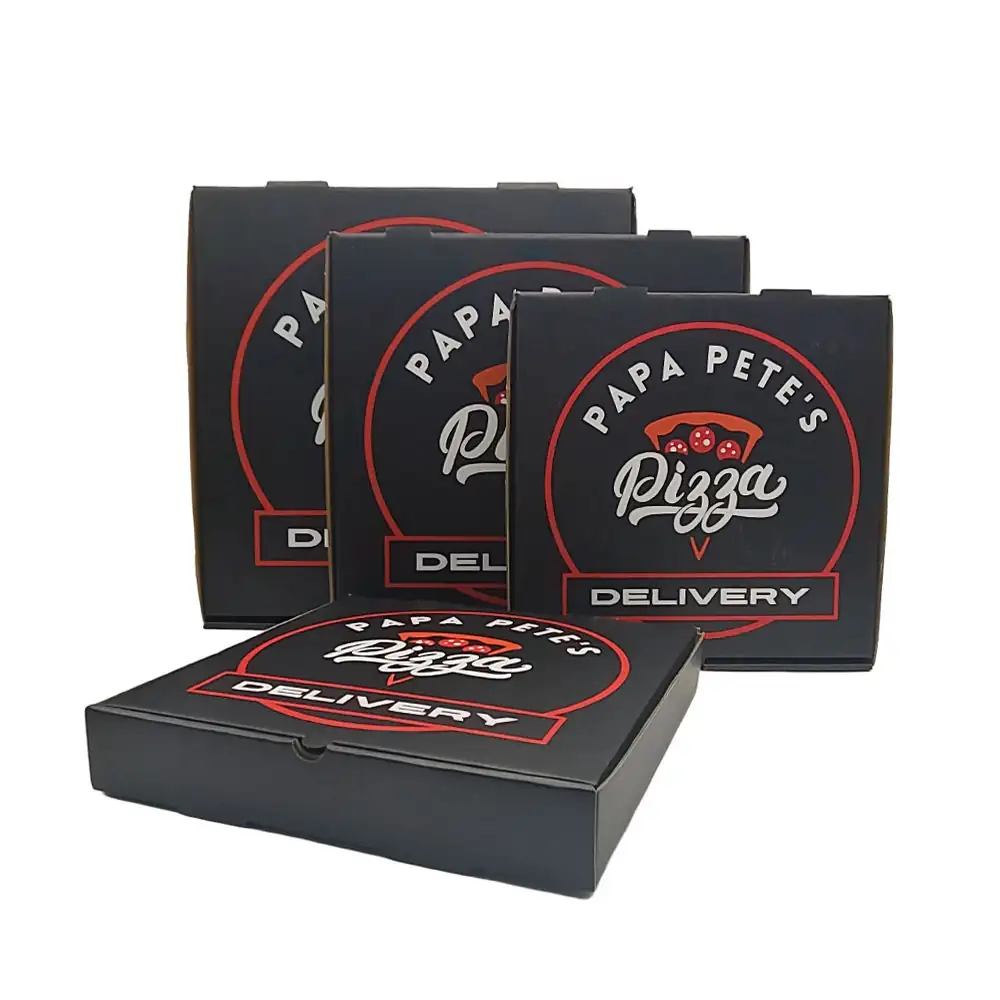
Food-grade oil-resistant coated pizza box
Whether a grease-resistant pizza box can be recycled depends almost entirely on the barrier you choose, not on the paperboard itself. Here is how the main options compare:
In practice the biggest recycling blocker is contamination rather than the coating. Remove leftover pizza, fold the box flat, and keep heavily greased sections out of the paper bin.
Food-service buyers should also request the documentation that proves a coating is both safe and genuinely sustainable: an FDA 21 CFR 176.170 food-contact declaration, an FSC Chain of Custody certificate for the paperboard, a written PFAS-free statement covering intentionally added substances, and ISO 9001 quality certification. Jinglin Packaging supplies all of these as standard through our sustainable packaging materials programme.
If you run a pizzeria or food delivery business, upgrading to custom greaseproof pizza boxes can significantly elevate your brand. You can choose:
With a reliable manufacturer like Jinglin Packaging, you get a complete solution — from material selection and coating to printing and die-cutting. Your custom boxes arrive die-cut, printed and ready to fold, so every pizza reaches the customer hot, clean, and perfectly presented.
Understanding how pizza boxes resist grease helps you make smarter packaging decisions. Whether you need a simple PE-coated box or a fully recyclable water-based barrier, the right approach keeps your food fresh and your brand looking sharp. Ready to upgrade? Request a quote and our team will recommend the right grease-resistant specification for your menu.
Explore our custom greaseproof pizza boxes designed for restaurants and delivery brands.
View Pizza Boxes →Pizza is served hot and oily, so steam and grease are released inside the box. Without a barrier, oil soaks into the cardboard fibres and the box becomes soggy, weak and unattractive. Greaseproofing keeps the box structurally strong, prevents leaks onto hands and delivery bags, and protects the professional presentation of your brand.
The four main options are PE (polyethylene) extrusion coating, water-based barrier coatings, PLA (polylactic acid) coatings, and separate greaseproof paper liners. Corrugated board also uses a fluted medium that traps some oil, but a barrier coating is required for full protection.
It depends on the coating. Boxes with water-based barrier coatings are repulpable and usually accepted in standard paper recycling, and paper liners can be recycled too. PE-coated boxes are difficult to recycle because the plastic film bonds to the fibre, while PLA coatings need commercial composting. Always remove food residue first.
PE coating applies a thin polyethylene film that delivers an excellent moisture and grease barrier but makes the box hard to recycle. Water-based coatings build the barrier from a dried dispersion instead of plastic, so they still resist oil while keeping the board repulpable and recyclable.
They should not. Older fluorochemical treatments relied on PFAS, but health and environmental concerns plus new US state restrictions have shifted the industry to PFAS-free systems. Ask your supplier for a written PFAS-free declaration and an FDA 21 CFR 176.170 food-contact statement.
Yes. Jinglin Packaging manufactures custom boxes in your own sizes with full-colour printing and grease-resistant coating options, plus structural features such as vent holes, locking lids and greaseproof liners. Send us your dimensions and artwork to start.