- Service ▼
- Products ▼
✨ 20+ Years Experience | 5,000+ Global Brands All Products →
- Sustainability
- About Us ▼
- Related Resources ▼
- Contact Us
Quick answer: Custom subscription boxes are branded mailer, rigid, or magnetic-closure boxes built to fit your monthly products. Most brands start with 500-1,000 units, choose corrugated mailer boxes for shipping, add die-cut inserts for protection, and use digital printing for 100-500 unit test runs before switching to offset printing at scale.
Subscription customers pay before they receive the product. They do not see the item first. So the box has to build trust. It must look professional. It must arrive in good condition. And it must make the customer feel excited to open it.
Good packaging also lowers churn. A customer who enjoys the unboxing is more likely to renew. That is why custom subscription boxes are not just a cost. They are a retention tool.
Three goals matter most:
In practice, box size is the biggest cost driver, not printing. Across 5,000+ subscription and DTC brands we have produced for since 2006, oversized boxes are the most common reason brands pay more than they need to, both in material and in dimensional shipping charges.
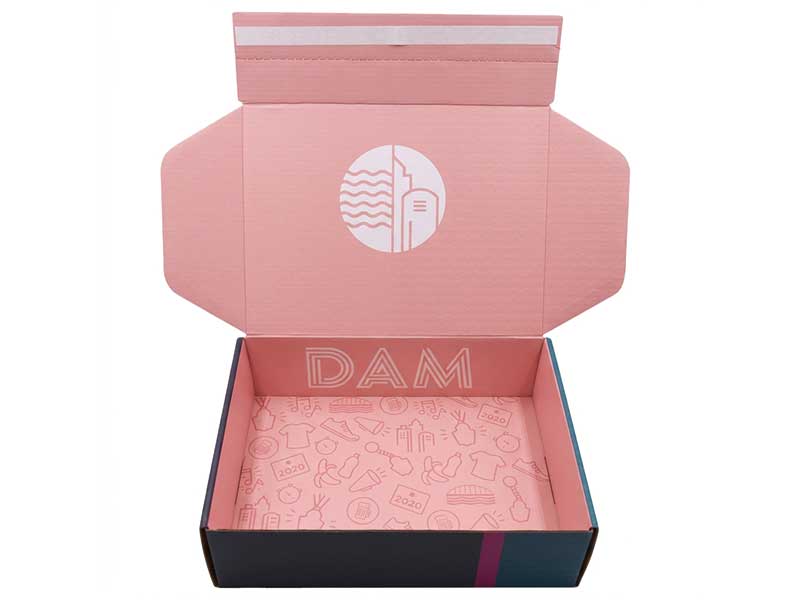
Custom subscription box packaging builds trust and reduces cancellations.
The first step is picking a box style. Each style has a different cost and feel. If you are still working out how to design subscription boxes for your brand, these four styles cover almost every use case.
Corrugated mailer boxes are the most popular choice. They are lightweight. They ship flat. They have a self-locking lid. And they are strong enough for most products. For monthly subscriptions, they offer the best balance of cost and protection.
Rigid boxes feel more premium. They use thick grey board wrapped in paper. They cost more than mailer boxes. But they are a good fit for higher-priced subscription tiers.
A magnetic closure gift box is the most premium option. The hidden magnets make the lid snap shut. This creates a satisfying moment when the customer opens the box. It works best for luxury subscriptions or special edition boxes.
Lid and base boxes are a two-piece design. They feel classic. They are often used for gifting. They also work well for subscriptions that mix several products.
| Box style | Best for | Protection | Relative cost | Typical MOQ |
|---|---|---|---|---|
| Corrugated mailer box | Most monthly subscriptions | High | Low | 500-1,000 units |
| Rigid box | Premium tiers and gifting | Very high | Medium to high | 500-1,000 units |
| Magnetic closure gift box | Luxury and special editions | Very high | High | 500-1,000 units |
| Lid and base box | Mixed-product sets and gifting | Medium to high | Medium | 500-1,000 units |
Custom subscription box styles compared by use case, protection, relative cost, and minimum order quantity.
Your box is a marketing surface. It should carry your brand identity. Here is what to consider.
Custom boxes with logo create instant recognition. Place your logo on the top lid. Use your brand colors on the sides. This keeps the box consistent with your website and social media.
Do not ignore the inside of the box. The inside is the first thing a customer sees when they open it. Many brands print a pattern, a message, or a short thank-you note on the inside lid.
Finishes change how the box feels. Common options include:
These details matter. They make your branded boxes feel more valuable. Customers notice the difference.
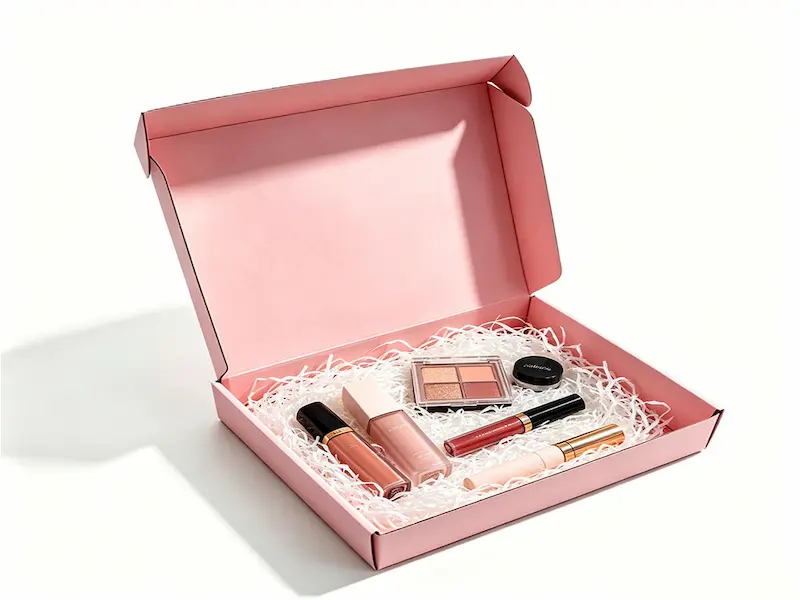
Brand colors, logo, and finishes create instant recognition.
Subscriptions often include several items. These items move during shipping if they are not secured. That is why inserts matter.
Inserts are die-cut trays that hold each product in place. They can be made from cardboard, foam, or molded pulp. Each material has a different cost and look.
A good insert also improves the unboxing. When the customer opens the box, everything is neatly arranged. This looks professional. It also protects your products from damage.
For heavier or fragile items, many brands pair die-cut inserts with reinforced custom shipping boxes so the outer carton stays crush-resistant through air and sea transit and last-mile delivery.
Personalization makes customers feel valued. It also increases retention. There are several simple ways to do this.
These touches do not cost much. But they change how the customer feels. And when customers feel special, they stay subscribed.

Personal touches turn a delivery into a moment.
Printing affects both quality and cost. There are two main methods for subscription boxes.
Digital printing is best for small runs. It supports 100 to 500 boxes. Colors match your design file closely. Setup cost is low. This is the most affordable way to produce custom printed subscription boxes while you test a new box design.
Offset printing is better for large orders. It becomes cheaper as volume increases. Colors are richer and more consistent. Use this method once you know your box design is final.
For most subscription brands, the plan is simple: start with digital, then move to offset as you grow.
Cost depends on several factors. These include box size, material, printing, and quantity. Here is how each one affects the price of subscription box packaging.
Most manufacturers set a minimum order quantity (MOQ). For most custom subscription box projects, the typical MOQ is 500 to 1,000 units. Some suppliers offer lower minimums with digital printing. This gives new brands a flexible way to start.
Before placing your order, go through this list. It helps avoid mistakes.
A little planning saves time and money. It also prevents surprises during production.
Custom subscription boxes are more than shipping containers. They are brand assets. They protect your products. They carry your identity. And they create moments that customers remember.
From choosing the right box style to adding personal touches, every decision matters. A well-designed box keeps subscribers happy and reduces cancellations. It is one of the best investments a subscription brand can make.
Ready to design your own custom subscription boxes? Jinglin Packaging offers full design and manufacturing services for custom subscription box packaging — from structural samples to final production.
Get a free quote and design consultation for your subscription box packaging project.
View Jinglin’s Custom Shipping Boxes →The best style depends on your products and brand. Corrugated mailer boxes work well for most subscriptions. Rigid boxes and magnetic closure gift boxes are better for premium tiers. Many brands use both: a mailer box for shipping and a rigid box inside for presentation.
Most new subscription brands start with 500 to 1,000 boxes. Digital printing allows smaller test runs of 100 to 300 boxes. This lets you test the design and size before committing to a large order.
Yes. Custom boxes with logo can be printed on the outside and inside. Full-color printing, foil stamping, and embossing are all available. You can also print a message or the subscriber’s name inside the lid for a personal touch.
Custom inserts are the best solution. They are made from cardboard, foam, or molded pulp and die-cut to fit your products. Inserts prevent movement during shipping and create a tidy presentation when the box is opened.
Cost depends on box size, material, printing, and quantity. Corrugated mailer boxes are the most economical option at volume. Rigid and magnetic closure gift boxes cost considerably more because they use thicker board and more hand assembly. Digital printing keeps test runs of 100 to 500 boxes affordable, while offset printing lowers the unit price once you order 1,000 units or more.