How to Measure a Box Dimension: A Complete Guide | Jinglin Packaging

How to Measure a Box Dimension: A Complete Guide

Do you truly know how to measure the size of a box? Accurate box measurements help you design better custom packaging and protect products more.

May 23, 2026 By Aron Deng 8 min read

How to Measure a Box Dimension?

How do you measure the dimensions of a cardboard box? You might think it’s simple—just measure each side. And you’re right, but it’s easy to confuse length, width, and depth (height).

With strong packaging expertise, I’ll help you measure your box dimensions. I’ll label them correctly. I’ll calculate the cubic volume. I’ll also cover the key factors.

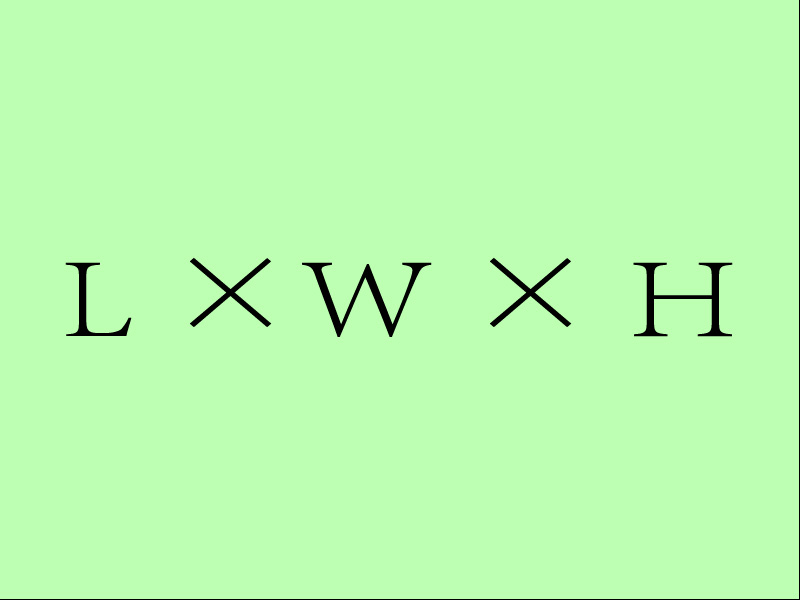
First, you need to measure the box’s length, width, and depth (height) accurately. Different custom packaging manufacturers may use different terms, such as length x width x height or length x width x depth. Don’t worry—as long as you list them in the order of length x width x depth (height), they’ll understand exactly what you mean.

Now, let’s understand the correct definitions of length, width, and height:

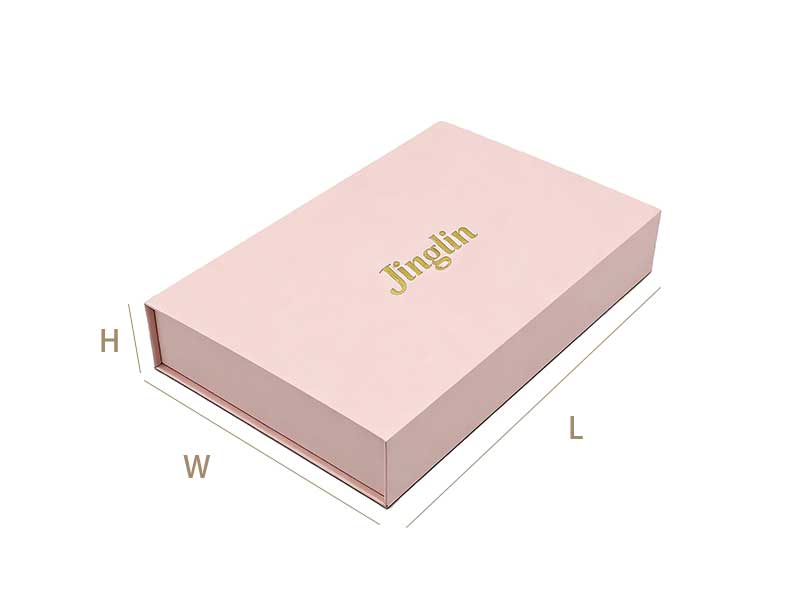
Length: The longest side from the opening of the box.

Width: The dimension at a right angle to the length, measured from the top or bottom.

Depth (Height): The side at a right angle to both length and width, extending from top to bottom.

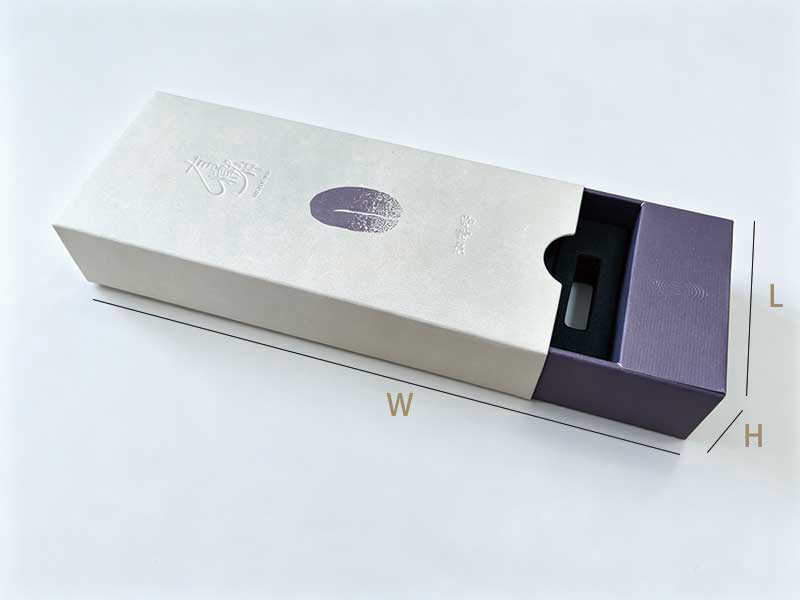
Why use the opening direction as the length? Sometimes the width is greater than the length. This can confuse the true dimensions. It can also cause mismatches between the required length and width.

Standard box dimensions showing length, width, and height
Standard length, width, and height
How to Measure a Box Dimension?
Example when the width is greater than the length
Box volume calculation example with dimensions
Example of calculating box volume from dimensions

Calculate the Volume of Your Box

Now that you know how to measure box dimensions accurately, you can explain your needs to packaging manufacturers. Next, let’s learn how to calculate box volume.

If you’re using inches, convert them to centimeters or meters. We usually use cubic meters as the unit of volume for a box. The formula is:

Length × Width × Height = Volume in cubic meters

Don’t forget to convert all dimensions to meters before multiplying. Here’s a demonstration:

29 cm (L) × 21 cm (W) × 7 cm (H) ÷ 1,000,000 = 0.0043 m³

0.29 m (L) × 0.21 m (W) × 0.07 m (H) = 0.0043 m³

This gives you the volume of a single box. Note that this formula works best for pre-assembled boxes, not flattened ones like shipping boxes or folding cartons. It is still suitable for most situations. It covers drawer-style boxes, lid-and-base packaging, and magnetic flip-top box designs. After you calculate the volume, multiply it by the total number of boxes. Then multiply by 167, the dimensional weight factor, to get the total volumetric shipping weight.

If you want to calculate flat boxes, especially the mailer boxes you use frequently, then you need to use the following formula.

Unfolded length × Unfolded width × Paper thickness

You should know that calculating the unfolded area of ​​mailer boxes also requires using:

length × width × height.

How do you calculate its unfolded length and unfolded width?

Please remember the following formula:

Unfolded Length: Length + (4 × Height)

Unfolded Width:(2 × width) + (3 × height)

These are the actual length, width, and height of the mailer boxes.

Please calculate the unfolded dimensions, measure the paper thickness, and then apply the values ​​to the volume calculation formula.

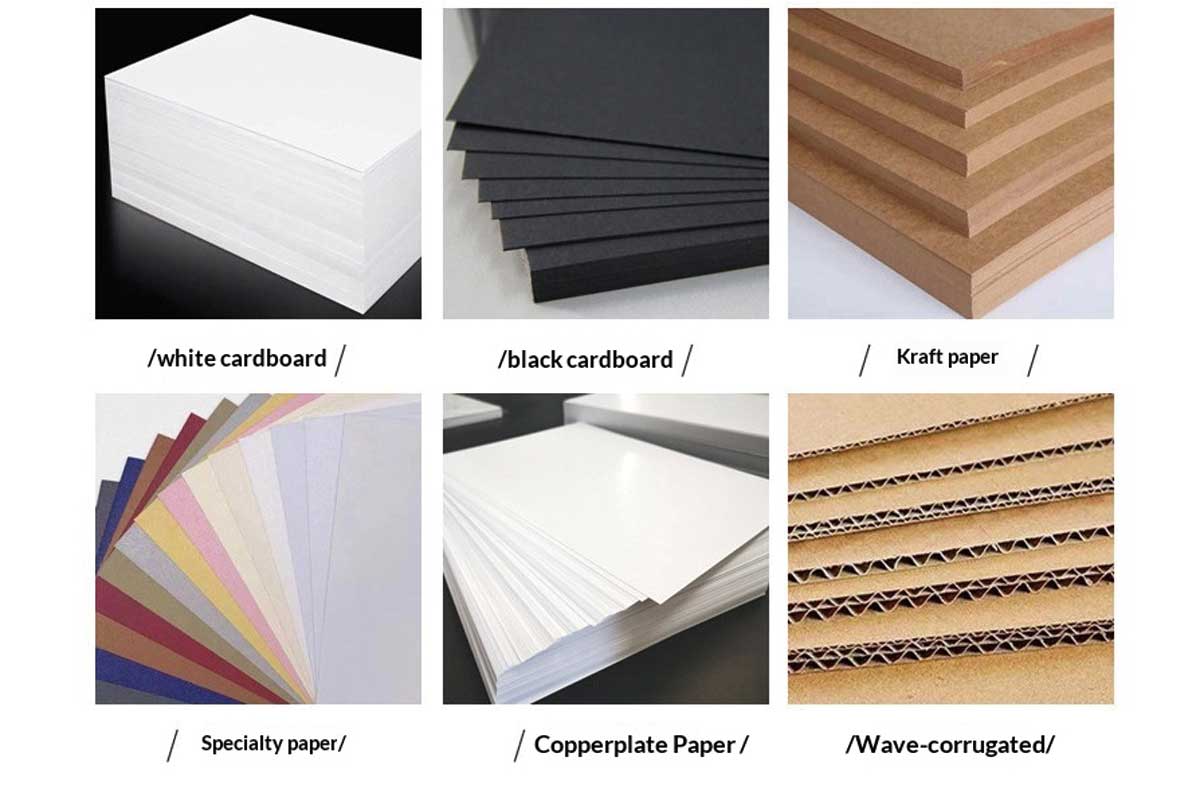
Different packaging materials thickness comparison
How different materials impact final box dimensions

The Influence of Different Materials on Size

Please note: You need to know from the start whether you require the outer or inner dimensions of the box. This will save you a lot of trouble later. When ordering custom packaging, tell the manufacturer whether your dimensions are outer or inner. Otherwise, they’ll assume you mean “production dimensions,” which are typically the outer dimensions.

Different materials affect the final size in different ways. For example, if you want outer dimensions of 25×20×7 cm, the manufacturer will handle it directly. But if you need inner dimensions of **25 × 20 × 7 cm**, consider the material thickness.

If your box uses **E-flute corrugated** or **1200 gsm grey board**, the outer size will be about **25.4 × 20.4 × 7.4 cm**.

Here are common material thicknesses to keep in mind:

157gsm Coated Paper ≈ less than 0.5mm, 250gsm Coated Paper ≈ 0.5mm, 350gsm Coated Paper ≈ 1mm

E-Flute Corrugated ≈ 2mm, B-Flute Corrugated ≈ 3mm

1200gsm Grey Board ≈ 2mm, 1400gsm Grey Board ≈ 3mm

Of course, when you choose materials of other thicknesses, please don’t forget to measure their thickness.

By now, you’ve learned how to accurately measure box dimensions and volume, and understand the thickness of common materials and their impact on box size. If you need one-stop custom packaging services, please feel free to contact us!

Ready to Create Your Custom Packaging?

Get an instant quote within 10-30 minutes and start designing packaging that will make your products stand out.

Get a Free Quote Now

All images belong to Jinglin Packaging or its factories and may not be used or reproduced without permission.